


2026 Subaru Crosstrek vs. Forester: Key Differences Explained
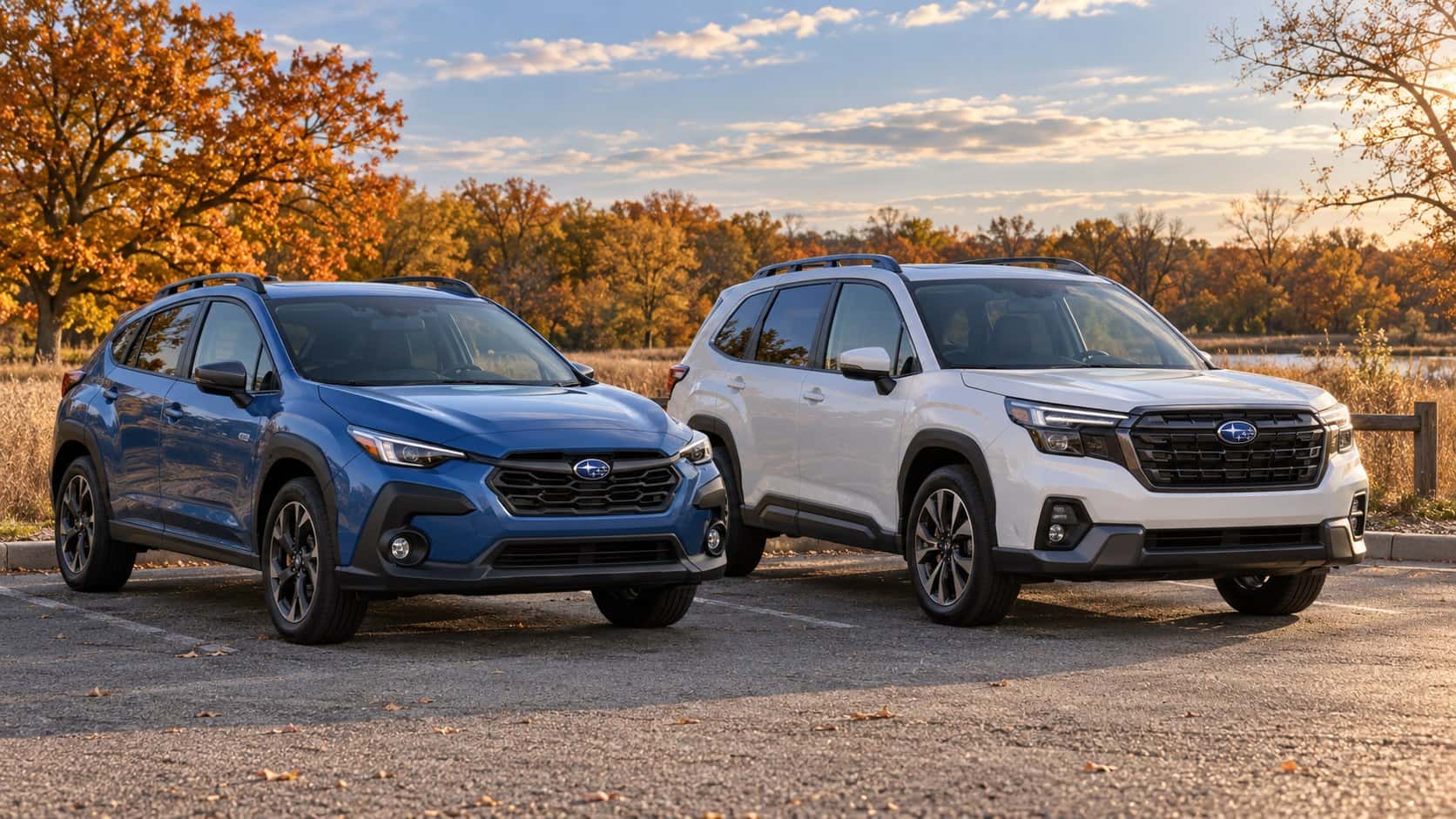
Cross-shopping the 2026 Subaru Crosstrek and Forester at Napleton’s Palatine Subaru? They look like close cousins, and in several ways they are. Both offer a gas engine and a hybrid, and both sit at the same ground clearance. The real differences come down to cargo room and price. Here’s how the Crosstrek and Forester compare.
Cargo Space: The Biggest Difference
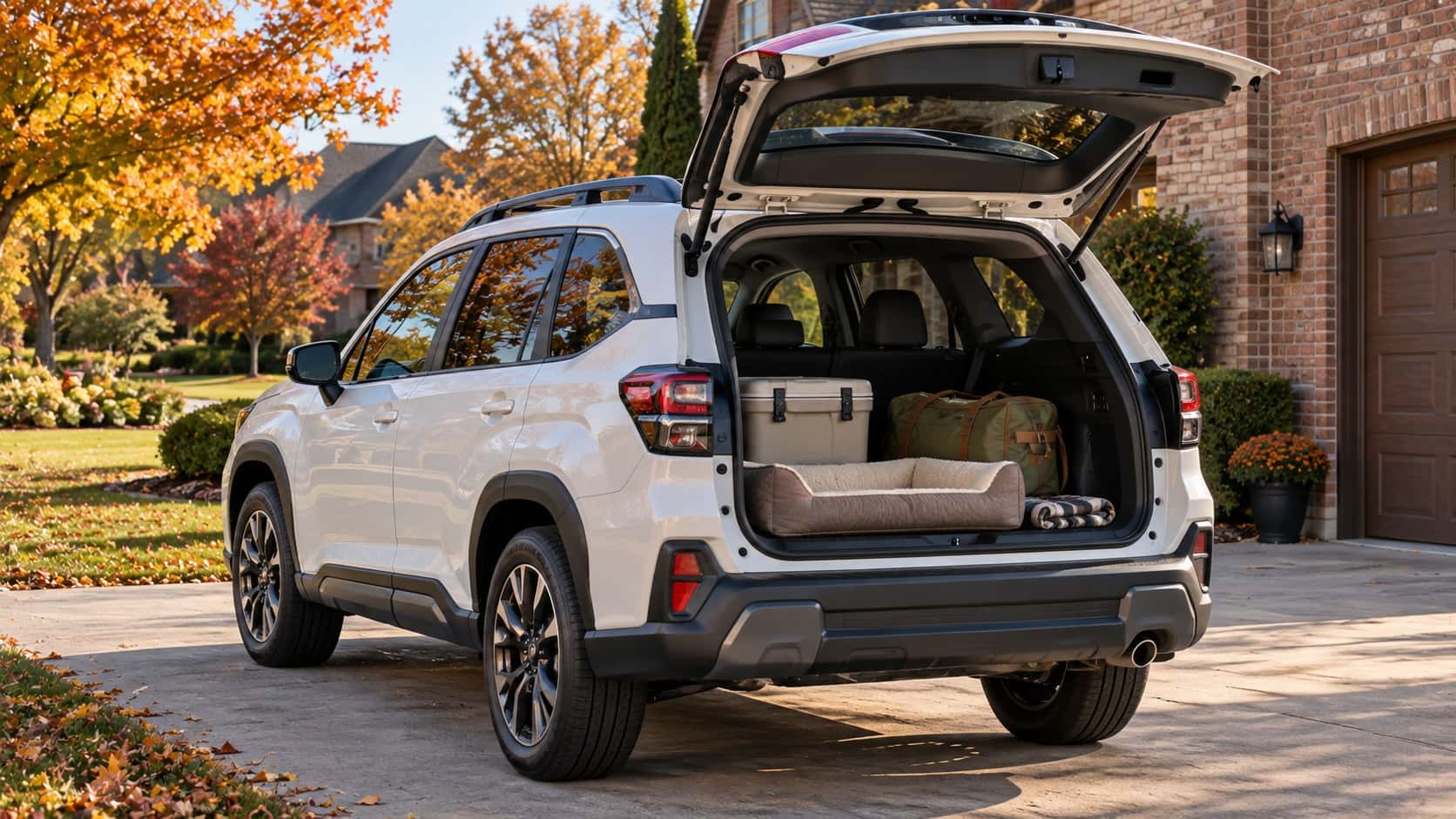
The 2026 Forester is the roomier of the two. Most Forester trims offer 27.5 cubic feet of cargo space and up to 69.1 cubic feet with the rear seat lowered, while the Base trim stretches to 29.6 and 74.4 cubic feet. The 2026 Crosstrek offers 19.9 cubic feet and up to 54.7 cubic feet on its gas trims, and 18.6 and 50.6 cubic feet on its hybrid trims. If you regularly haul gear, strollers, or pets, that extra room at Napleton’s Palatine Subaru is worth seeing in person.
Engine & Power
Both SUVs use the same 2.5-liter engine making 180 horsepower on their gas trims. Both also offer a hybrid with 194 horsepower of total system output. The Crosstrek Hybrid is offered on its Sport and Limited trims, while the Forester Hybrid is offered on Premium, Sport, Limited, and Touring.
Fuel Economy
The gas 2026 Crosstrek and Forester share the same EPA estimates of 33 mpg highway and 26 mpg city. The hybrids differ slightly: the 2026 Crosstrek Hybrid is rated at 36 mpg highway and 36 mpg city, while the 2026 Forester Hybrid is rated at 34 mpg highway and 35 mpg city. The Crosstrek Hybrid also edges ahead on range, at 597 miles versus 581 for the Forester Hybrid.
Ground Clearance
Despite the size difference, the two match here. Both the Crosstrek and Forester offer 8.7 inches of ground clearance on most trims, rising to 9.3 inches on the off-road-ready Wilderness trim.
Safety
Both come with EyeSight® Driver Assist Technology standard on every trim. On crash-test results, the 2026 Forester earned the IIHS TOP SAFETY PICK+ award, the Institute’s highest honor. The 2026 Crosstrek Hybrid earned TOP SAFETY PICK+ as well, though the gas Crosstrek is not among IIHS’s 2026 award winners. Shoppers at Napleton’s Palatine Subaru who put safety first can choose either the Forester or the Crosstrek Hybrid.
Trims & Pricing
The 2026 Crosstrek starts at $26,995 and is offered in seven trims: Base ($26,995), Premium ($27,995), Sport ($30,625), Limited ($32,995), Wilderness ($33,795), Sport Hybrid ($33,995), and Limited Hybrid ($34,995). The 2026 Forester starts at $29,995 and is offered in ten trims, with gas versions from Base ($29,995) to Touring ($39,995) and hybrid versions from Premium Hybrid ($34,730) to Touring Hybrid ($41,545). That makes the Crosstrek about $3,000 less to start. All prices are MSRP and don’t include destination and delivery. The team at Napleton’s Palatine Subaru can confirm current pricing and incentives.
Which Subaru Is Right for You?
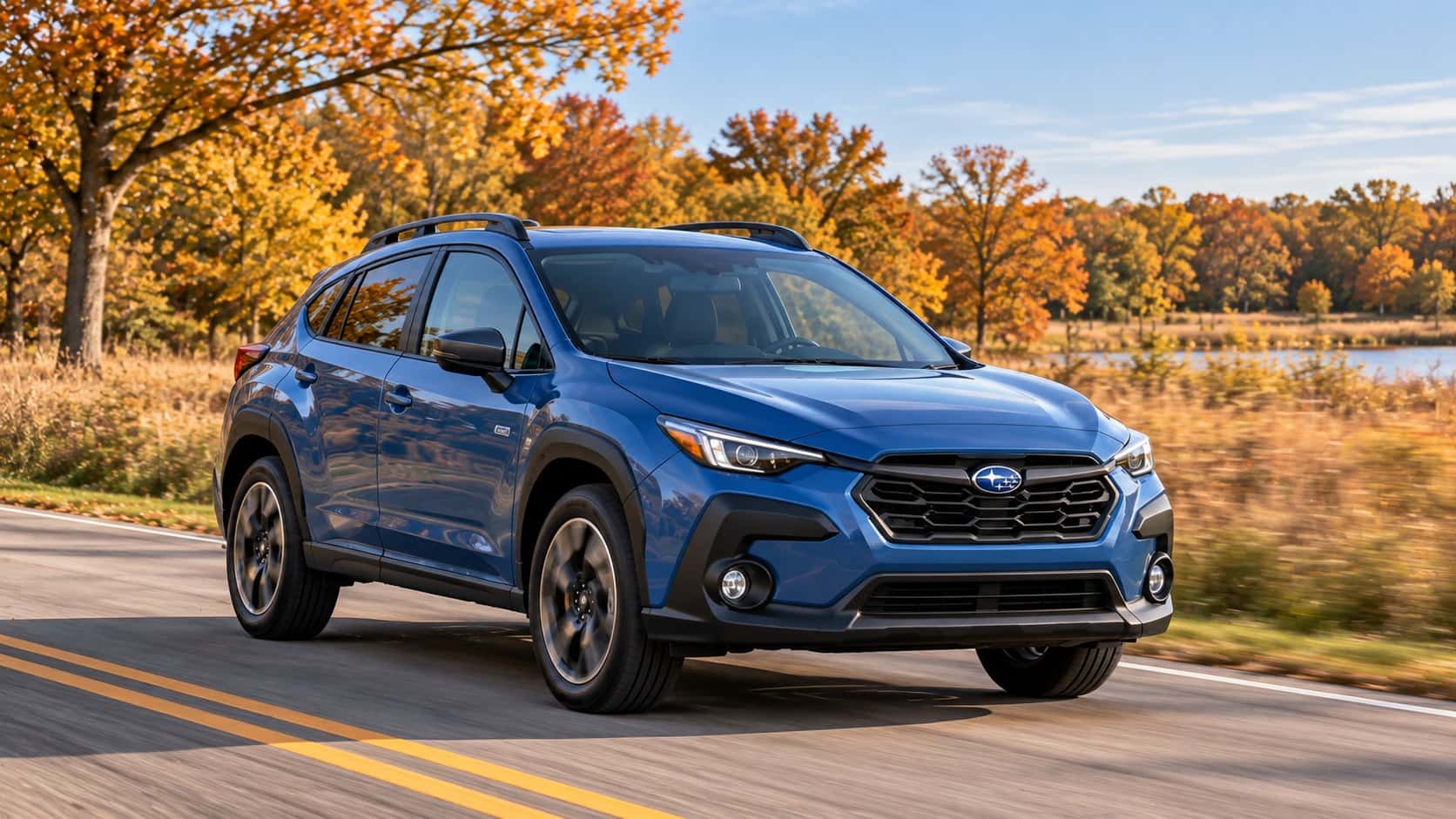
If you want the lower price and a more compact footprint, the Crosstrek is the better fit. If you need more cargo room or a wider choice of trims, the Forester is worth the extra cost. Either way, you can choose a gas or hybrid powertrain.
Ready to compare the Crosstrek and Forester side by side? Visit Napleton’s Palatine Subaru to test drive both and find the one that fits your life.
Frequently Asked Questions
What is the main difference between the Subaru Crosstrek and Forester?
The Forester offers noticeably more cargo room (27.5 cubic feet versus 19.9 for gas models) and costs about $3,000 more to start, while the Crosstrek is the smaller, lower-priced option.
Which is safer, the Subaru Crosstrek or Forester?
Both come standard with EyeSight® Driver Assist Technology. The 2026 Forester and 2026 Crosstrek Hybrid each earned the IIHS TOP SAFETY PICK+ award, while the gas Crosstrek did not appear on IIHS’s 2026 winners list.
Do the Crosstrek and Forester both come as hybrids?
Yes. Both the 2026 Crosstrek and 2026 Forester offer a hybrid with 194 horsepower, and both are self-charging, so neither needs to be plugged in.
0 comment(s) so far on 2026 Subaru Crosstrek vs. Forester: Key Differences Explained